Recommended Posts
At What Trailer Weight Is a Super Duty Diesel Strongly Recommended Over Gas?
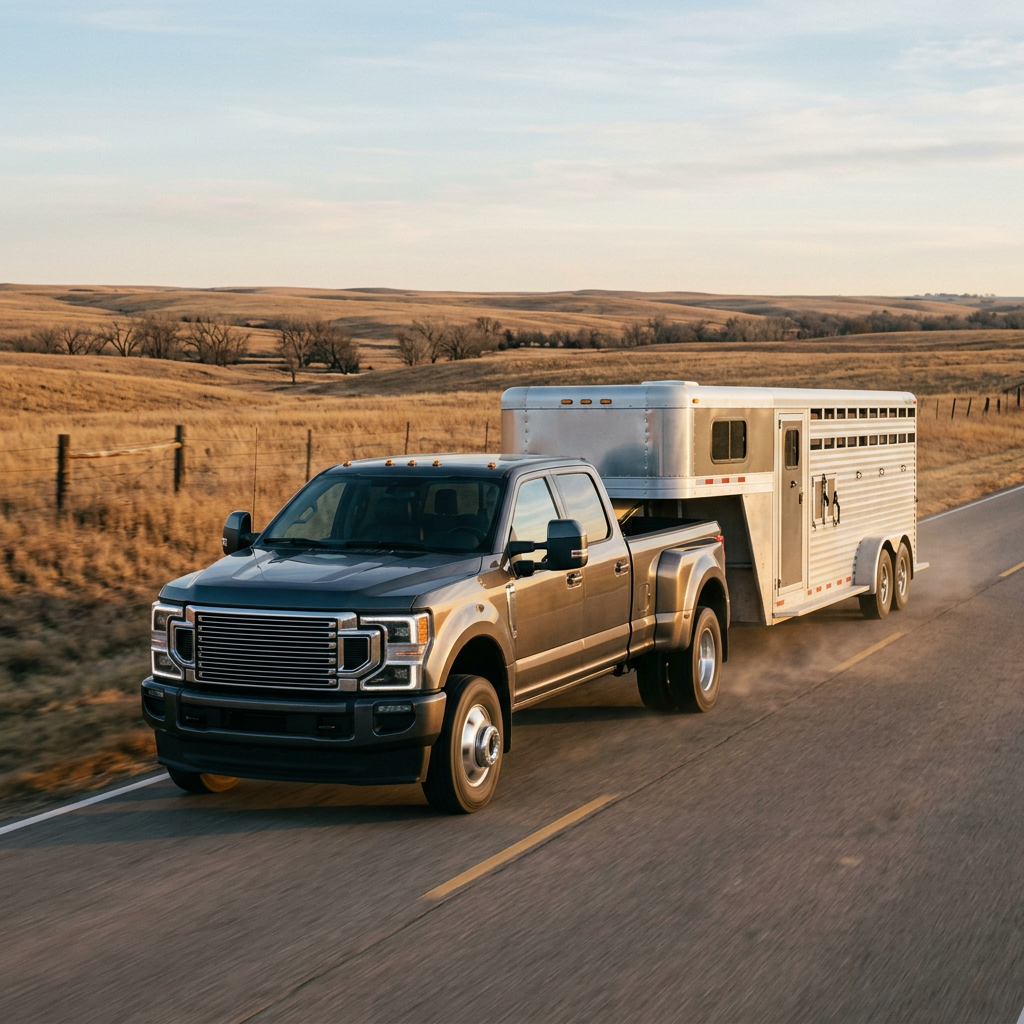
At What Trailer Weight Is a Super Duty Diesel Strongly Recommended Over Gas? A diesel engine is strongly recommended once your regular trailer weight crosses 14,000 to 15,000 pounds. Below that threshold, a modern heavy-duty gas engine manages the load comfortably for occasional weekend trips or job-site runs. Once you consistently hook up to loads exceeding 15,000 pounds—especially enclosed horse trailers, large fifth wheels, or heavy equipment haulers—the diesel powertrain transforms the towing experience by delivering immense low-end pulling power, reduced engine strain, and active downhill engine braking. In my 11 years as a Finance Manager at Valor Ford, I walk customers through the financial and mechanical realities of their purchase every day. When truck shoppers sit down at my desk, the initial focus is often on raw maximum tow ratings. The real deciding factor is how often you tow, the terrain you navigate, and how much weight sits behind the bumper. If you haul heavy equipment across the rolling agricultural corridors around Junction City on a daily basis, opting for the diesel engine provides the long-term powertrain durability and composure that protects your investment over years of heavy use. Choosing the right powertrain upfront prevents expensive trading cycles later. If you buy a gas truck and routinely overload its sweet spot, you will face increased fuel stops, higher engine speeds on grades, and earlier wear on mechanical components. Our team can help you evaluate your equipment and trailer setup before you sign. You can stop by our showroom on Goldenbelt Boulevard to review window stickers and powertrain options, or give us a quick call to discuss current allocation. Table of Contents What Is the Towing and Payload Capacity Difference Between Super Duty Diesel and Gas? How Do Torque and Horsepower Compare Between the 6.7L Power Stroke and 7.3L Gas V8? How Does the Driving Experience Differ When Towing With Gas Versus Diesel? What Is the Real-World Towing Fuel Economy for Super Duty Diesel Versus Gas? How Many Miles Does It Take to Break Even on the Upfront Diesel Engine Cost? Finding and Financing Your Next Ford Super Duty at Valor Ford What Is the Towing and Payload Capacity Difference Between Super Duty Diesel and Gas? The Ford Super Duty diesel holds a substantial advantage in maximum gooseneck and fifth-wheel towing, while the gas engine often delivers higher available payload ratings. Properly equipped, the 7.3-liter gas V8 reaches a maximum towing capacity of 22,500 pounds, whereas the standard-output 6.7-liter Power Stroke diesel pulls up to 38,600 pounds, and the high-output diesel reaches an astounding 40,000 pounds. Achieving that headline 40,000-pound rating requires a specific build: an F-450 Regular Cab dual-rear-wheel configuration equipped with the High-Capacity Gooseneck Tow Package. In typical single-rear-wheel Crew Cab setups, the conventional towing differences are narrower. For example, in an F-250 Crew Cab 4x4 configuration, conventional bumper-pull towing is rated at 18,200 pounds with the 7.3-liter gas engine compared to 22,000 pounds with the diesel. Payload tells an equally important story that many buyers overlook during the ordering process. The 6.7-liter Power Stroke diesel engine and its aftertreatment system add roughly 800 to 1,000 pounds of curb weight to the front axle compared to the gas V8. Because Gross Vehicle Weight Ratings are fixed by class, that additional engine weight directly subtracts from available payload. A properly configured gas Super Duty offers up to 7,635 pounds of maximum payload, compared to 6,935 pounds on a high-output diesel model. If you tow a large fifth wheel or gooseneck, pin weight counts against your payload capacity, making the gas truck appealing for specific heavy-pin, moderate-trailer configurations. If your trailering requirements are much lighter and focused on weekend recreation, our lot also features alternatives like the new Ford Bronco, but for serious hauling tasks, matching Super Duty payload to trailer tongue weight is essential. How Do Torque and Horsepower Compare Between the 6.7L Power Stroke and 7.3L Gas V8? The primary operational difference between these two engines lies in peak torque delivery and the engine speed where that power occurs. The naturally aspirated 7.3-liter gas V8 produces 430 hp at 5,500 rpm and 485 lb-ft of torque at 4,000 rpm. The standard-output 6.7-liter Power Stroke diesel produces 475 hp and 1,050 lb-ft of torque, while the high-output variant elevates output to 500 hp and 1,200 lb-ft of torque starting at just 1,600 rpm. That massive torque gap fundamentally changes how each truck moves a load from a complete stop. While the 7.3-liter gas engine is a pushrod workhorse designed for commercial reliability and low maintenance, it requires higher engine revolutions to reach its powerband. The diesel engine delivers more than double the torque of the gas V8 right off idle. That allows the turbocharger to build boost quickly and pull heavy trailers up highway merge ramps without breaking a sweat. Both engines pair with Ford’s heavy-duty 10-speed automatic transmission, which provides tightly spaced gear ratios that optimize engine performance. The gas engine shifts more frequently to stay in the upper registers of its torque curve under heavy strain, whereas the diesel locks into a higher gear and uses its immense low-rpm torque to climb hills without downshifting. For shoppers exploring late-model options, our selection of pre-owned trucks and haulers frequently features both powertrain designs so you can evaluate the mechanical differences firsthand. How Does the Driving Experience Differ When Towing With Gas Versus Diesel? Towing with a diesel truck feels relaxed and quiet, while towing heavy with a gas truck demands more driver involvement and higher engine revolutions. When climbing a 6% grade with a 14,000-pound load, the 7.3-liter gas V8 will downshift several gears, causing engine speeds to jump past 4,000 rpm where the cabin experiences noticeable mechanical noise. The truck handles the grade safely, but the high-revving nature of a gas engine working near capacity can be fatiguing on long-distance hauls. The 6.7-liter Power Stroke diesel handles that same steep highway climb at 1,800 to 2,200 rpm in eighth or ninth gear. Acceleration is prompt, and passing slower traffic requires minimal throttle input. More importantly, the diesel engine includes a factory integrated exhaust brake. This system utilizes variable turbocharger geometry to create engine backpressure, slowing the truck and trailer smoothly on steep descents without overheating the wheel brakes. For commercial operators, cattle ranchers, and contractors moving stock through rural Dickinson County, the difference in descending control provides significant peace of mind. Instead of riding the service brakes and risking fade down rolling terrain, the exhaust brake holds the entire rig at a steady, preset speed. If you are considering trading in your current half-ton or older gas three-quarter-ton truck, our staff can run a prompt used vehicle trade valuation to determine your equity position before upgrading to a heavy-duty platform. What Is the Real-World Towing Fuel Economy for Super Duty Diesel Versus Gas? Fuel efficiency while towing is significantly higher with the diesel powertrain, helping balance out fuel pump price differences over extended mileage. When pulling an aerodynamic or moderate load between 10,000 and 15,000 pounds, the 6.7-liter Power Stroke diesel typically returns 10 to 13 mpg, depending on wind conditions and road speed. Under identical conditions, the 7.3-liter gas V8 generally achieves 7 to 9 mpg. Unladen highway driving reveals an even wider variance between the two powerplants. In independent 75-mph highway testing, an F-250 4x4 Crew Cab equipped with the high-output diesel achieved 20 mpg, yielding a cruising range of 680 miles. The same cab configuration with the 7.3-liter gas engine registered 15 mpg, delivering roughly 510 miles of highway range. The gas engine operates on standard 87-octane unleaded fuel, while the diesel requires ultra-low-sulfur diesel and regular replenishments of Diesel Exhaust Fluid. Fuel economy also impacts your daily driving schedule. A truck delivering 12 mpg while towing allows you to travel nearly 150 miles farther per tank than a truck averaging 8 mpg, cutting down on awkward stops at compact highway gas stations with a 35-foot trailer in tow. You can review full platform specs and cab combinations through our Ford Super Duty F-250 model breakdown to determine which tank size and wheelbase align with your regional travel needs. How Many Miles Does It Take to Break Even on the Upfront Diesel Engine Cost? From a strict fuel-savings perspective, most commercial and retail buyers need to tow between 120,000 and 150,000 miles before the diesel's superior fuel economy offsets its initial purchase premium. Upgrading from the gas engine to the standard 6.7-liter Power Stroke diesel adds roughly $9,995 to the window sticker, while the high-output version commands approximately $12,495. Calculating the true break-even horizon requires looking at the total cost of ownership rather than fuel alone: Fuel cost differentials: While diesel fuel often carries a per-gallon price premium over 87-octane gas, the diesel truck burns 25% to 35% less fuel when towing heavy trailers. Maintenance requirements: Diesel engines hold up to 13 quarts of specialized oil, require regular fuel filter replacements at shorter intervals, and consume Diesel Exhaust Fluid during heavy pulling. Resale value retention: In the finance department, we consistently see diesel Super Duty trucks command substantially higher trade-in values after four to six years on the road, recovering 60% to 75% of the original engine option cost at resale. Powertrain warranty protection: Ford backs the gas powertrain with a 5-year/60,000-mile warranty, whereas the diesel powertrain comes standard with a 5-year/100,000-mile warranty, offering extended protection for high-mileage drivers. If you drive fewer than 10,000 miles per year and only pull a camper on holiday weekends, the 7.3-liter gas engine is mathematically the smarter financial choice. The lower purchase price keeps your monthly payment manageable, and you avoid the extra cost of fuel filters and emissions fluids. If you log 25,000 miles annually with a commercial trailer hitched every week, the diesel's fuel savings, extended engine life, and strong resale value make it the superior purchase. Finding and Financing Your Next Ford Super Duty at Valor Ford Matching the right Super Duty engine to your trailering demands comes down to transparent numbers, real equipment weights, and personalized financing structures. At Valor Ford, our sales consultants and finance team work side by side to ensure you do not overspend on capabilities you will never use, or compromise on powertrain strength when your livelihood demands maximum towing performance. We partner with a wide array of local credit unions, regional lenders, and Ford Motor Credit to help you explore financing options that fit your needs. Whether you need an entry-level work truck with the 7.3-liter V8 or a fully optioned Lariat dualie with the high-output Power Stroke, we take the hassle out of the purchase process. You can start your paperwork ahead of time and apply for pre-approval online in just a few minutes. When you are ready to compare gas and diesel driving dynamics on the open road, plan a trip to see us in person at 1825 Goldenbelt Blvd, Junction City, KS 66441. You can stop in for a walk-around tour of our inventory or call our team directly at (785) 238-5114 to set up a dedicated commercial or retail consultation. Let us help you secure the capability and value you need before you hook up your next load. Keep Your Vehicle Running Strong Keep your vehicle performing at its best with our service team: Schedule Pickup and Delivery Service Schedule Ford Service Today Order Genuine Ford Parts © 2026 Valor Ford. All rights reserved.
What Is the Maximum 2026 Super Duty Payload, and How Do You Verify It?
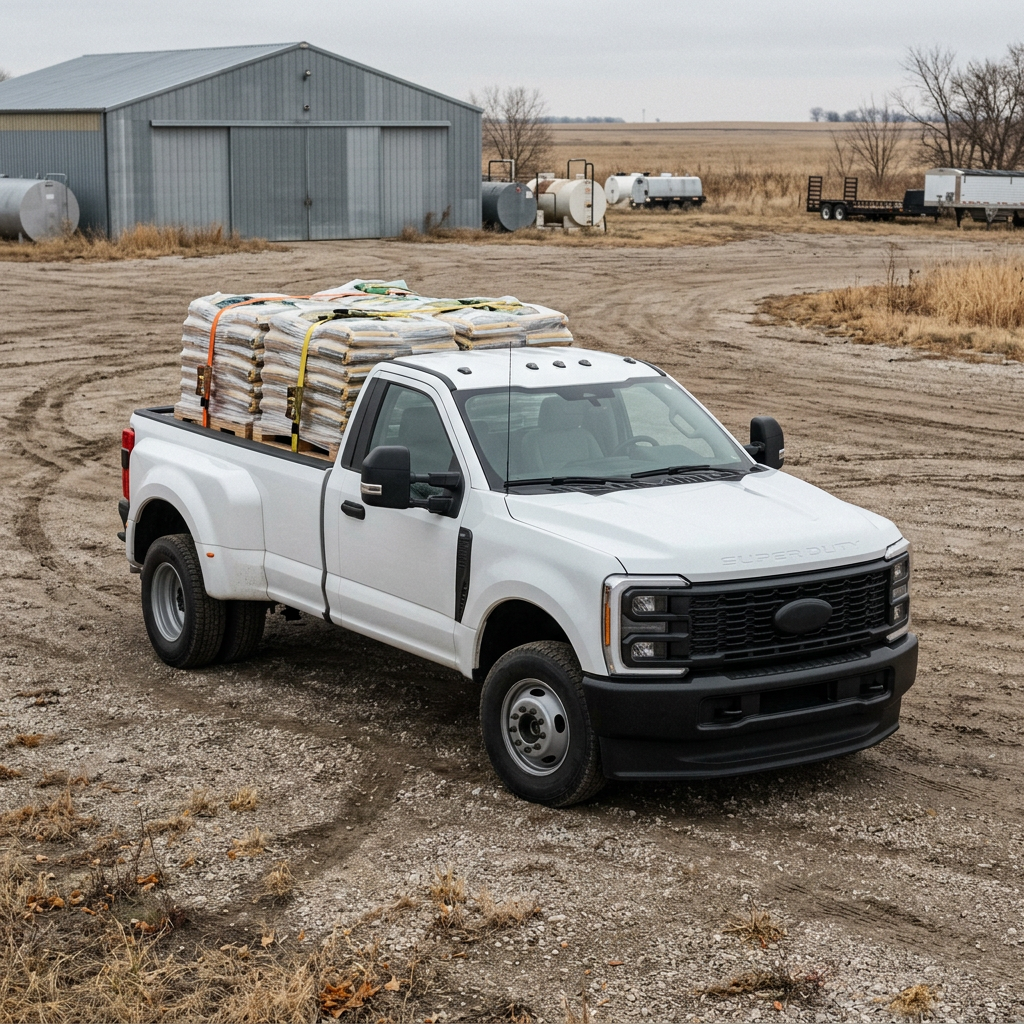
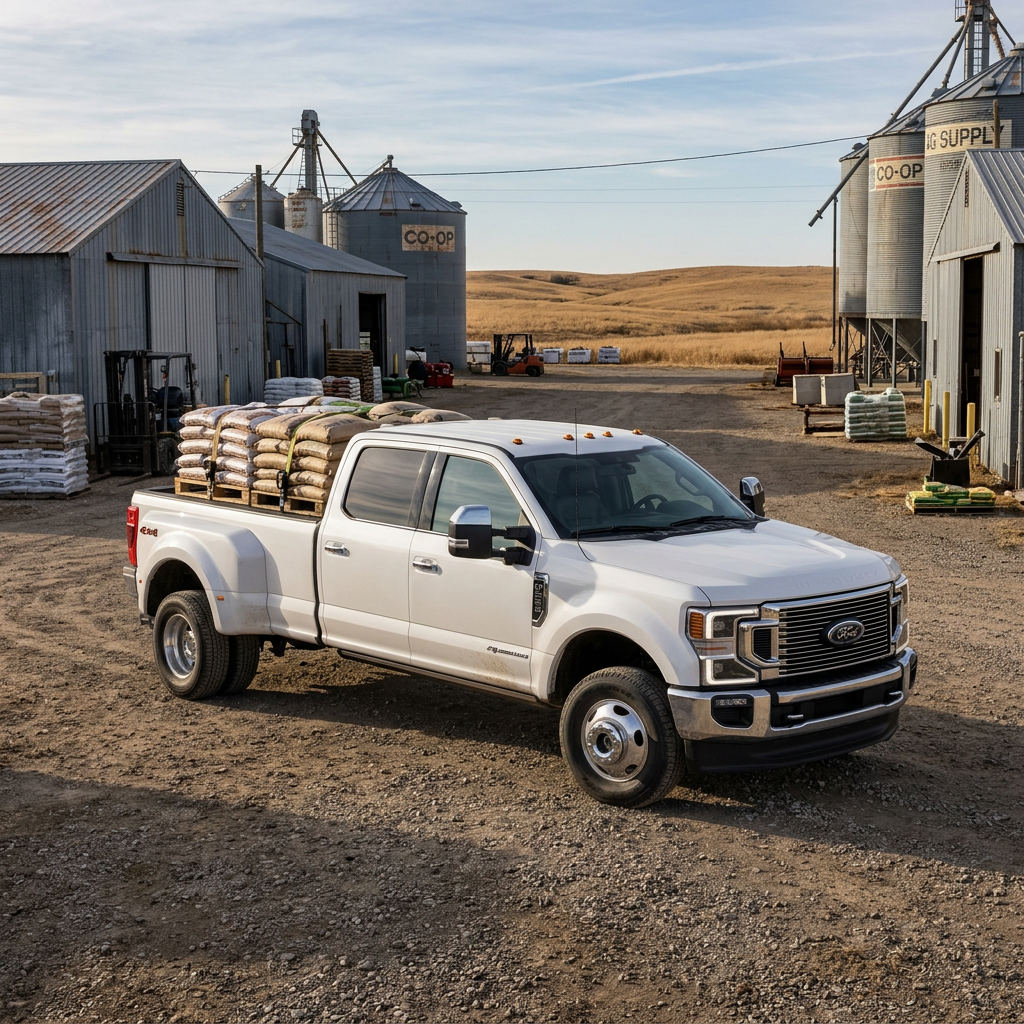
What Is the Maximum 2026 Super Duty Payload, and How Do You Verify It? The maximum payload capacity for the 2026 Ford Super Duty is 8,000 lb on a properly configured gas model, while diesel configurations top out at 6,952 lb. To find the true payload limit of any specific truck, buyers must check the Tire and Loading Information label permanently affixed to the driver-side door jamb. That sticker lists the precise weight of cargo and occupants that individual chassis can carry as equipped from the factory. After 11 years as Finance Manager at Valor Ford, I see buyers conflate brochure maximums with real-world bed capacity almost every week. The headline-grabbing 8,000 lb rating applies specifically to a regular cab F-350 DRW two-wheel-drive truck equipped with the 6.8L gas V8 and the optional F-350 Gas Heavy-Duty Payload Package. Choosing a four-wheel-drive system, a four-door SuperCrew cab, luxury interior appointments, or the heavier diesel engine adds curb weight to the bare chassis, which directly subtracts from that top payload figure. Calculating your functional carrying margin requires subtracting the curb weight, passenger weight, and after-purchase accessories from the vehicle's Gross Vehicle Weight Rating ( GVWR). Even tongue weight or fifth-wheel pin weight counts dollar-for-dollar against that door-jamb payload limit. For commercial operators and trade professionals working job sites across Junction City, carrying tools, gravel, or palletized materials requires verifying that yellow-and-white door label before hitching up or loading the bed. If you want our team to help you calculate payload ratings or match a configuration to your work equipment, give us a quick call at (785) 238-5114. Table of Contents What Is the Maximum Towing Capacity Across the 2026 Ford Super Duty Lineup? 2026 Super Duty Engine Lineup: Horsepower, Torque Specs, and Towing Ratings Should You Buy an F-250 or F-350 for Fifth-Wheel and Gooseneck Towing? How Does the 2026 Super Duty Compare to the Chevrolet Silverado HD and Ram HD? What Smart Towing Tech and Driver-Assist Features Come on the 2026 Super Duty? Can You Add a Fifth-Wheel Hitch Without the Factory Prep Package? What Is the Maximum Towing Capacity Across the 2026 Ford Super Duty Lineup? The 2026 Ford Super Duty achieves a maximum towing capacity of 40,000 lb with a gooseneck hitch, 35,000 lb with a fifth-wheel setup, and 30,000 lb with a conventional bumper-pull receiver when properly equipped. Reaching the peak 40,000 lb gooseneck rating requires an F-450 DRW Regular Cab fitted with the High-Output 6.7L Power Stroke diesel and the High-Capacity Gooseneck Tow Package. Towing capability scales across the lineup depending on cab configuration, axle ratios, rear wheel setups, and hitch styles. A single-rear-wheel F-250 delivers up to 22,000 lb of conventional towing and 23,000 lb of fifth-wheel or gooseneck towing with the high-output turbo-diesel, making it a natural fit for heavy equipment haulers or large toy haulers. Stepping up to an F-350 DRW allows fifth-wheel ratings to climb past 32,000 lb, bridging the gap between weekend recreation and commercial hauling. Different towing needs require different vehicle architectures across the Ford family. Shoppers who need trail-ready agility for backcountry hunting rather than heavy commercial hauling often cross-shop our new Ford Bronco Badlands inventory, while those seeking three-row family utility explore 2026 Ford Explorer research details for daily driving comfort. For those whose daily demands involve heavy equipment trailers and industrial machinery, reviewing our 2026 Ford Super Duty F-250 research overview provides the specific configuration data required to match your trailer weights. 2026 Super Duty Engine Lineup: Horsepower, Torque Specs, and Towing Ratings Ford equips the 2026 Super Duty with four distinct powertrains: two naturally aspirated gas engines and two turbocharged diesel powerplants, topped by a high-output diesel producing 500 hp and 1,200 lb-ft of torque. Every engine pairs with a heavy-duty TorqShift 10-speed automatic transmission designed to hold gears on steep grades and manage extreme thermal loads. The standard entry point is the 6.8L gas V8, producing 405 hp and 445 lb-ft of torque, with a maximum tow rating of 18,900 lb. Drivers needing greater gas performance can select the 7.3L gas V8, known colloquially as the Godzilla engine, generating 430 hp and 485 lb-ft of torque with a maximum tow rating of 22,500 lb. For agricultural operations hauling livestock trailers across the rolling farmland of Dickinson County, the gas powertrains provide strong low-end pulling power without the added upfront cost or diesel exhaust fluid requirements of an oil-burner. Long-distance haulers and extreme-load operators generally gravitate toward the 6.7L Power Stroke diesel, which delivers 475 hp and 1,050 lb-ft of torque for a maximum tow rating of 38,600 lb. The flagship High-Output 6.7L Power Stroke diesel upgrades the turbocharger and exhaust manifolds to achieve 500 hp and 1,200 lb-ft of torque, unlocking the maximum 40,000 lb towing threshold. Buyers seeking proven heavy-duty capability on an practical value can also browse our pre-owned truck inventory to compare previous-generation diesel and gas configurations. Should You Buy an F-250 or F-350 for Fifth-Wheel and Gooseneck Towing? An F-350 is generally the superior choice for fifth-wheel and gooseneck trailers exceeding 12,000 to 14,000 lb because fifth-wheel configurations place roughly 20% to 25% of their total trailer weight directly into the truck bed as pin weight. While an F-250 possesses the raw engine torque to pull heavy loads, its lower GVWR limits available payload, meaning heavy pin weight quickly overloads the rear axle. Consider a 15,000-lb fifth-wheel recreational camper. At a conservative 20% pin weight, that trailer places 3,000 lb straight down onto the hitch inside the bed. An F-250 with a four-door cab and luxury options often has a payload rating on its door jamb between 2,800 and 3,300 lb, leaving virtually no margin for passenger weight, hitch hardware, tools, or fuel. The F-350 provides heavier rear leaf springs, larger axle shafts, and a higher GVWR, often yielding an extra 1,000 to 1,500 lb of payload margin in single-rear-wheel form and far more in dual-rear-wheel configurations. Taking the time to match your truck chassis to your trailer pin weight prevents premature suspension wear and keeps your setup fully compliant with highway weight regulations. Our finance department makes it straightforward to get pre-approved for financing online so you can structure your purchase around the exact chassis capacity you require. You can review detailed specs via our detailed 2026 Ford F-250 research pages, or schedule a service consultation with our technicians to inspect your existing vehicle's suspension and hitch components. How Does the 2026 Super Duty Compare to the Chevrolet Silverado HD and Ram HD? The 2026 Ford Super Duty outpulls both of its primary heavy-duty rivals, delivering a segment-leading maximum tow rating of 40,000 lb and a peak diesel torque rating of 1,200 lb-ft. By comparison, the Chevrolet Silverado 3500 HD maxes out at 36,000 lb of towing, while the Ram 3500 tops out at 36,310 lb. Under the hood, Ford maintains a clear torque advantage that translates into faster highway merging under load and more authoritative hill climbing. The High-Output 6.7L Power Stroke diesel generates 1,200 lb-ft of torque, compared to 975 lb-ft from the Chevrolet Duramax 6.6L turbo-diesel and 1,075 lb-ft from the high-output Cummins diesel in the Ram 3500. Ford's maximum payload rating of 8,000 lb also outpaces the Chevrolet Silverado 3500 HD's peak of 7,234 lb and the Ram 3500's peak of 7,680 lb, providing a higher functional carrying capacity for chassis-cab and commercial dump bed builds. Heavy towing value comes down to usable payload margin and powertrain efficiency rather than raw purchase price alone. The Super Duty's aluminum-alloy body construction sheds base vehicle weight, allowing engineers to redirect that weight savings into thicker steel frame crossmembers and beefier axles. If you are considering trading your current pickup for a new heavy-duty rig, our online trade-in evaluation tool provides an instant market estimate to apply toward your next truck. What Smart Towing Tech and Driver-Assist Features Come on the 2026 Super Duty? Pro Trailer Hitch Assist, Pro Trailer Backup Assist, and Onboard Scales with Smart Hitch are among the 2026 Super Duty’s trailering tools. These systems combine computer vision, radar sensors, and suspension-height sensors to streamline trailer coupling and load balancing. Pro Trailer Hitch Assist utilizes the rear camera and radar sensors to automatically control the truck's steering, accelerator, and brakes, guiding the receiver ball directly beneath the trailer coupler without requiring a spotter. Once attached, the Onboard Scales with Smart Hitch measure tongue weight in real time, displaying load balance on the central 12-inch touchscreen or through visual LED lighting patterns on the taillamps. This immediate feedback helps drivers adjust cargo forward or backward to achieve the recommended 10% to 15% tongue weight for conventional towing, or 20% to 25% for fifth-wheel towing. Driver assistance continues while cruising down the interstate with BLIS (Blind Spot Information System) featuring extended trailer coverage, which accounts for the entire length of the trailer when signaling lane changes. The available 360-Degree Camera system offers custom trailer camera integration, including a 180-degree view behind the trailer to eliminate common blind spots. If you need replacement wiring harnesses, trailer camera kits, or auxiliary brake controllers, our team can help you order genuine Ford parts engineered specifically for your Super Duty. Can You Add a Fifth-Wheel Hitch Without the Factory Prep Package? Trucks that leave the assembly line without the factory fifth-wheel prep package can easily accommodate an aftermarket under-bed hitch system installed directly to the frame rails. Leading aftermarket manufacturers engineer under-bed mounting systems that replicate the factory five-hole puck layout without requiring any frame drilling or chassis welding. A quality under-bed kit bolts directly to pre-existing holes in the Super Duty's fully boxed high-strength steel frame. A specialty hole saw cuts the center gooseneck ball opening and four perimeter puck holes through the truck bed floor, allowing the hitch mounting platform to sit flush with the corrugated bed surface. When the hitch is unpinned and removed, the truck bed floor remains completely unobstructed for standard cargo loading. Before purchasing hitch hardware, always verify that the aftermarket kit's Gross Trailer Weight Rating matches or exceeds your truck's certified towing capacity and trailer weight. For hands-on assistance selecting hitch packages or inspecting a used truck's frame mounting points, get directions to Valor Ford and speak directly with our truck specialists about configuring your setup for safe hauling. © 2026 Valor Ford. All rights reserved.

F-250 vs F-350: Choosing the Right Payload for Your Needs
F-250 vs F-350: Choosing the Right Payload for Your Needs How Does Engine Choice Affect Payload Capacity in an F-250 vs F-350? Opting for a heavier diesel engine directly reduces available payload capacity compared to a gasoline engine on both the F-250 and F-350 because engine curb weight eats directly into the truck's Gross Vehicle Weight Rating (GVWR). On an identical 10,000-lb GVWR setup, choosing the diesel engine reduces carrying capacity by roughly 800 to 1,000 pounds compared to a gas V8. The curb weight difference between powertrains explains this gap. The standard 6.8L gas V8 and available 7.3L gas V8 are substantially lighter iron blocks than the 6.7L Power Stroke diesel and the 6.7L high-output diesel with its massive 500 hp and 1,200 lb-ft of torque. That heavy diesel hardware sits over the front axle, taking up allowable gross capacity before you even put a driver in the cab. For instance, in Ford's published specifications for a 2026 F-250 4x4 Crew Cab with a 175.9-inch wheelbase, opting for the 7.3L gas V8 yields a charted maximum payload of 3,196 lb, whereas equipping that exact configuration with the 6.7L high-output diesel drops maximum payload down to 2,415 lb within a standard 10,000-lb GVWR ceiling. Many truck shoppers focus exclusively on horsepower and pulling power without factoring in how those heavy powertrain components limit bed capacity. If you spend your workdays hauling bulk gravel or loading heavy ag supplies across Junction City, that gas engine preserves several hundred pounds of legal bed capacity that the diesel gives up to its cooling systems and emissions hardware. To map out how engine options align with your equipment needs, you can get directions to Valor Ford or give us a quick call to check configurations on our lot. Table of Contents Why Does the Ford F-350 Have a Higher Payload Capacity Than the F-250? What Is the Real Payload Capacity Difference Between the Ford F-250 and F-350? Is an F-350 SRW Worth the Upgrade Over an F-250 for Heavy Towing? When Is a Dual-Rear-Wheel F-350 Necessary Over an SRW Model? Is an F-250 or F-350 Better for Hauling a Slide-In Truck Camper? Where Can an Owner Locate the Exact Official Payload Capacity on a Ford Truck? Why Does the Ford F-350 Have a Higher Payload Capacity Than the F-250? The Ford F-350 carries a higher payload rating than the F-250 because it is engineered with a substantially higher Gross Vehicle Weight Rating, supported by a stiffer rear suspension pack and stouter axle components. While both trucks share the same fully boxed high-strength steel frame and cab dimensions, the F-350 is built to legally and mechanically support several thousand pounds of additional weight over its rear axle. Underneath the bed, the physical differences become clear. A single-rear-wheel F-350 typically utilizes an extra rear leaf spring along with auxiliary overload springs that remain disengaged during empty driving but engage as the suspension compresses under severe loads. The F-350 also receives heavy-duty rear axle assemblies with thicker axle tubes and larger wheel bearings designed to dissipate the heat and stress generated by heavy carrying tasks. These structural upgrades allow Ford to assign the F-350 a certified GVWR ranging from 11,000 pounds up to 14,000 pounds depending on cab and wheel setup, whereas standard F-250 configurations are frequently capped at a 10,000-lb GVWR class ceiling. If you are comparing heavy-duty models for commercial use, you can research Ford F-250 configurations in detail, or inspect our rotating inventory by browsing our selection of pre-owned work trucks to see how different spring packs hold up over time. What Is the Real Payload Capacity Difference Between the Ford F-250 and F-350? The real-world payload capacity difference between an F-250 and a single-rear-wheel F-350 ranges from roughly 800 pounds to over 1,500 pounds for identical cab and engine configurations. In maximum theoretical builds across the entire lineup, the gap is wider, spanning from 4,055 lb on a properly equipped F-250 single-rear-wheel up to 7,900 lb on a dual-rear-wheel F-350. Looking at matching truck builds demonstrates how this gap works on the ground. Ford's 2026 specification charts show that a four-wheel-drive Crew Cab long-bed F-250 equipped with the 7.3L gas V8 carries a maximum charted payload of 3,196 lb. An F-350 single-rear-wheel in the identical cab, bed, and engine configuration on 18-inch all-season tires jumps to 4,150 lb of maximum payload. That is a real-world gain of nearly a thousand pounds of capacity without changing the interior space, exterior footprint, or engine performance. Maintaining your truck's driveline components is essential when operating near these load limits, and our team is ready to schedule routine Ford maintenance to inspect your brakes and suspension. To explore specific towing configurations and options, take a moment to read through our Super Duty overview. Is an F-350 SRW Worth the Upgrade Over an F-250 for Heavy Towing? An F-350 single-rear-wheel is absolutely worth the upgrade over an F-250 if you plan to tow fifth-wheel trailers or heavy goosenecks where vertical pin weight quickly consumes your truck's cargo rating. While both trucks can pull immense weight behind the hitch, the F-350 provides the essential legal payload cushion needed to support a trailer that places 20 to 25 percent of its total weight directly into the bed. A fully loaded 15,000-pound fifth-wheel camper routinely generates a kingpin weight of 3,000 pounds. In a diesel-equipped F-250 Crew Cab with an available payload rating sitting around 2,400 to 2,800 pounds, hitching that trailer instantly puts the vehicle over its legal GVWR before you load passengers, fuel, or camping gear into the cabin. An F-350 SRW handles that same trailer with hundreds of pounds of surplus payload room on the certification label. Aftermarket suspension upgrades like helper springs or air bags can level the truck, but they never legally increase the certified GVWR stamped on the factory placard. Upgrading to an F-350 from the start protects your safety and legal compliance on the highway. If you are preparing to trade your current rig for more towing capability, you can request an online used vehicle trade-in valuation and start your purchase path to get pre-approved for automotive financing before visiting the lot. When Is a Dual-Rear-Wheel F-350 Necessary Over an SRW Model? A dual-rear-wheel F-350 becomes necessary when your cargo demands exceed a 4,500-pound payload requirement or when you are towing commercial gooseneck trailers with pin weights exceeding 4,000 pounds. Adding two extra tires across the rear axle doubles your tire contact patch, providing unmatched lateral stability and eliminating rear-tire overloading under extreme tongue weights. Dual rear wheels transform how a truck handles under heavy load. A dual-rear-wheel Regular Cab two-wheel-drive F-350 equipped with the 7.3L gas V8 and the Gas Heavy-Duty Payload Package reaches an industry-leading maximum payload rating of 7,900 lb against a 14,000-lb GVWR. Single-rear-wheel tires are typically limited to roughly 3,600 to 3,750 pounds of load capacity per tire, meaning two rear tires max out around 7,200 to 7,500 pounds of total supported rear axle load. Splitting that load across four rear tires prevents thermal breakdown, reduces sway in crosswinds, and offers an essential margin of safety if a tire suffers a blowout under load. Whether you need a dually for massive livestock trailers or prefer a weekend recreation vehicle like our new Ford Bronco inventory for off-road trails, selecting the correct chassis is critical. If your current truck requires replacement hardware or suspension components, you can easily order factory-approved replacement parts through our department. Is an F-250 or F-350 Better for Hauling a Slide-In Truck Camper? An F-350 is substantially better suited for hauling a hard-side slide-in truck camper because camper applications place 100 percent of their dry and wet weight directly inside the truck bed. Even mid-sized slide-in truck campers often exceed 3,000 pounds once you account for water tanks, propane cylinders, dual batteries, and outdoor gear, which pushes past the legal payload limits of most standard F-250 builds. When hauling heavy campers across the rolling terrain of Dickinson County, top-heavy cargo raises the truck's center of gravity. An F-350 features the stiffer spring rates and auxiliary overloads required to control severe body roll on uneven gravel roads or undulating highway surfaces. Loading a heavy camper into a softer F-250 often results in excessive rear-end sag, which unweights the front steer tires and degrades steering precision and braking performance. Truck buyers carrying larger multi-slide truck campers weighing over 4,000 pounds wet should consider skipping single-rear-wheel configurations entirely in favor of an F-350 dually. The wide rear track of a dual-rear-wheel truck provides the broad foundation required to anchor top-heavy campers in crosswinds without white-knuckle driving. Where Can an Owner Locate the Exact Official Payload Capacity on a Ford Truck? An owner can find the exact, certified payload rating for their specific vehicle on the yellow and white Tire and Loading Information placard located on the driver-side door jamb. That sticker features the explicit statement: "The combined weight of occupants and cargo should never exceed XXXX kg or XXXX lbs." Published brochures, advertising listings, and online specification sheets list theoretical maximum ratings for stripped-down, base-trim configurations. Factory options such as four-wheel-drive transfer cases, skid plates, power running boards, larger wheels, and luxury center consoles add weight to the bare chassis, reducing available cargo capacity pound for pound. Two trucks with identical trims on a dealer lot can carry distinct payload ratings if one is fitted with a fifth-wheel prep package, panoramic moonroof, or spray-in bedliner. Reviewing that door-jamb sticker is the only way to confirm legal capacity before hooking up heavy equipment. If you want our commercial sales staff to review your door sticker specifications or inspect your truck's ratings in person, visit our dealership showroom or connect directly with our specialists by making a phone inquiry today. © 2026 Valor Ford. All rights reserved.
Contact Us
Although every reasonable effort has been made to ensure the accuracy of the information contained on this site, absolute accuracy cannot be guaranteed. This site, and all information and materials appearing on it, are presented to the user "as is" without warranty of any kind, either express or implied. All vehicles are subject to prior sale. Price does not include applicable tax, title, and license charges. ‡Vehicles shown at different locations are not currently in our inventory (Not in Stock) but can be made available to you at our location within a reasonable date from the time of your request, not to exceed one week.